We experience mild winters but chilly evenings all year here in Playa Vista, CA, so you need a reliable heating system. However, because it seldom freezes, you have more viable options than you might elsewhere. When you choose a heating system, it’s a decision that you may have to live with for years. That makes it essential to understand all your options so you can make a wise choice. With that in mind, here is everything you should know about furnaces, heat pumps, and ductless mini-splits. They’re the three most common heating systems in the area.
All About Furnaces
Furnaces have been the most popular heating option in the US for decades. That isn’t without reason. Furnaces offer an attractive mix of benefits and have few downsides. Here are their advantages and disadvantages.
Furnace Advantages
Furnaces come in two main types, gas-fired and electric. Electric furnaces are among the cheapest heating solutions available, at least in terms of upfront cost. They’re also 100% efficient. However, despite their efficiency, high electricity costs can make their prolonged use expensive. Gas furnaces, meanwhile, boast efficiencies between 81% and 98.5%. However, natural gas costs may be lower than electricity costs, making gas furnaces cheaper to operate.
No matter which furnace type you choose, you can expect years of reliable heat. Electric models tend to last a bit longer, but you can expect 15 to 20 years of service from either type with proper maintenance. Plus, modern furnaces have an excellent operational safety record, so you can feel confident in using them.
If you have a new-construction home or building, Los Angeles prohibits the installation of gas furnaces in order to reduce the carbon footprint. In 2030, California will implement a state-wide ban on the sale of gas furnaces and water heaters. This might make it more difficult to procure replacement parts quickly in the future.
Furnace Disadvantages
The most significant disadvantage of an electric furnace is its operating cost. They’re similar to large electric space heaters, so they consume lots of electricity. Gas furnaces, meanwhile, require that your home has natural gas service. If you don’t have gas service, installing it can dramatically increase your upfront costs. And if nothing else in your home uses natural gas, you’ll get stuck paying supply charges year-round anyway. That can seriously eat into any savings you’d achieve through lower operational costs.
All About Heat Pumps
Heat pumps are growing in popularity throughout Playa Vista. It’s happening for multiple reasons. One of the most important reasons is that electric heat pumps help homeowners reduce their carbon footprint. In a place that’s proving vulnerable to climate change, that’s a big deal. Plus, heat pumps have several other advantages that make them worth considering. Here’s what you need to know.
Heat Pump Advantages
Extraordinary energy efficiency is the most significant single advantage of owning a heat pump. In mild climates like ours, a heat pump can operate at close to 400% efficiency. That makes heat pumps one of the most efficient heating solutions on the planet. And as a bonus, a heat pump can also serve as your home’s cooling system. If your home already has a ducted AC system, upgrading to a heat pump is simple. If you don’t have ducts, there are mini-split options for that as well.
A heat pump doesn’t have a heating element; it absorbs heat from the outdoor air, compresses it so that it gets very hot, and distributes that heat throughout the home. That means it uses very little electricity compared to an electric furnace. However, most installations will require a 240-volt separate circuit. You can also expect approximately 15 years of reliable use from a well-maintained heat pump.
Heat Pump Disadvantages
Of course, heat pumps aren’t perfect, or everyone would have one. One of their main disadvantages is their upfront cost. Heat pumps can cost 2 to 3 times as much as a furnace. However, when you consider that a heat pump serves as a heating and cooling system, it makes sense. Additionally, heat pumps lose efficiency as outdoor temperatures drop below 40 degrees Fahrenheit. So, if we experience prolonged cold weather, their operating costs can rise.
It’s also worth considering that switching to a single-system heating and cooling solution has some risk. When you own a heat pump, a single component failure means no heating or cooling. So, you can’t delay necessary repairs, no matter when they occur.
All About Mini-Split Heat Pumps
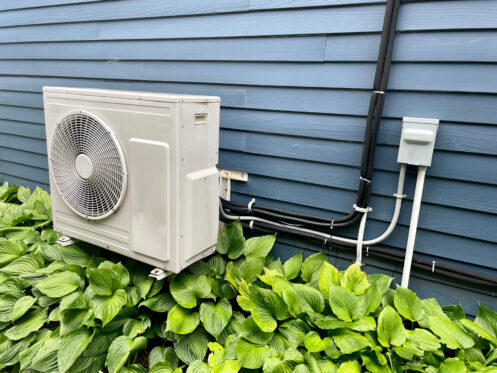
Mini-splits are a type of heat pump, but with a twist: they don’t need ductwork to function. Instead, they combine a sleek outdoor unit with wall-mounted air handlers. Like traditional heat pumps, mini-splits can provide both heating and cooling for your home. Here are some of their noteworthy advantages and disadvantages.
Mini-Split Advantages
Ductless mini-splits have all the same advantages as traditional ducted heat pumps. However, they’re even more efficient because they don’t rely on ductwork. Ductwork can reduce HVAC efficiency by 30% due to leakage and convective losses. Mini-splits produce hot or cold air precisely where you need it using individual room air handlers. Plus, mini-splits offer zoned heating and cooling by default. So, you can set different temperatures in each room or turn off individual air handlers completely.
Ductless mini-splits are a perfect option for homes without ductwork or whose ductwork needs replacement. You can even install one to heat and cool a newly finished part of your home, like a basement or addition. A single mini-split can support up to eight indoor air handlers simultaneously. Importantly, each air handler has a washable air filter, helping improve indoor air quality.
Mini-Split Disadvantages
Of all the heating options mentioned here, ductless mini-splits have the highest upfront costs. These units require an annual maintenance check before the weather warms enough to call for air conditioning. During that visit, the technicians will also check the heating components, as they may be in use year-round at night. Mini-split owners need to perform more regular maintenance, too. Each air filter in a mini-split air handler should be cleaned every two weeks. Neglecting them can lead to premature failure of the air handler.
Count on Us for the System You Choose
Now that you know more about your home’s heating system options, you should be able to make an informed choice. However, whichever system you choose, count on Belle Air Services to install it for you. We sell and install high-quality heating systems from manufacturers such as Daikin and Mitsubishi Electric. Our team of HVAC technicians is highly trained and has decades of combined experience. So, if you need a new heating system installed in your Playa Vista home, contact our team at Belle Air Services today.